
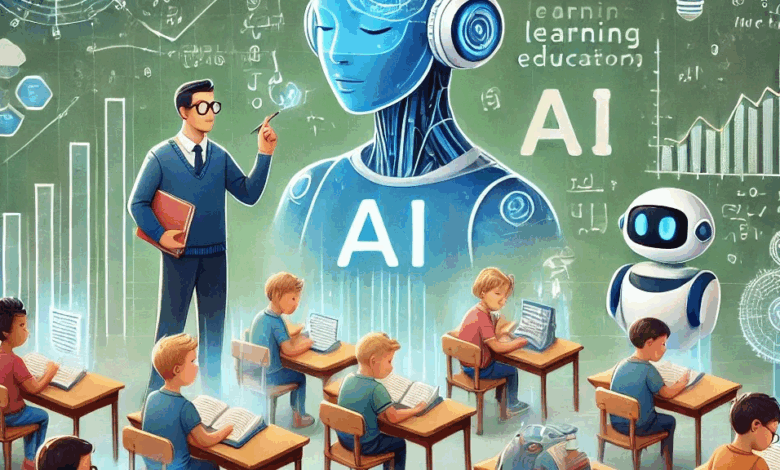
What is Artificial Intelligence (AI) and Why Does It Matter?
The term Artificial Intelligence (AI) is everywhere nowadays. You’ve likely seen headlines about robots or used “smart” features on your phone today. While it sounds like science fiction, the reality of AI is much simpler and incredibly helpful.
In this guide, we’ll break down what AI is, how it differs from traditional computers, and why it is becoming an essential tool for our future.
Traditional Software vs. Artificial Intelligence
To understand AI, we first have to look at how computers used to work.
Standard computers are electronic machines that do exactly what they are told—neither an inch more nor an inch less. The instructions they follow are called computer programs.
- Traditional Software works like a rigid recipe. It requires precise, clear instructions with a predetermined result. If a programmer doesn’t define every single step, the computer gets stuck. In this sense, the machine is “dumb”—it has no ability to adapt.
- Artificial Intelligence is technology that allows machines to simulate human intelligence. Instead of just following a recipe, AI software can learn, reason, and make decisions to solve problems.
How Does AI Work? (The Child Brain Analogy)
How do you know what a cat looks like? You recognize it instantly because your brain has seen thousands of cats.
AI works through a process called Machine Learning. Think of it like a child’s brain:
- Observation: As a child grows, they see, hear, and feel. This data is saved as memory.
- Recognition: When a child sees something new, they compare it to their memory. If they’ve seen it before, they recognize it. If not, they store it as “new data.”
- Learning: Over time, their “database” grows, and they become better at figuring out and analyzing situations.
AI programs work the same way. Instead of waiting for years for a computer to learn, we “feed” it massive amounts of data at once. By showing a computer 10,000 photos of cats, it finds patterns—the shape of the ears, the texture of fur—and eventually identifies a cat on its own. We have “artificially” made the machine “intelligent.”
The 3 Core “Powers” of AI
This learning process grants AI three primary capabilities:
- Perception: The ability to “see” (facial recognition) and “hear” (understanding voice commands like Alexa or Siri).
- Reasoning: Sorting through vast data to find the best solution, such as calculating the fastest route in Google Maps.
- Continuous Learning: AI systems improve over time. The more data they process, the more accurate they become.
How We Use AI in Everyday Life
You are likely using AI dozens of times a day without realizing it. It has become the “invisible assistant” in our pockets.
- Streaming & Shopping: Netflix and Amazon use AI to analyze your past behavior and predict what you’ll want to watch or buy next.
- Smartphones: From FaceID unlocking your screen to “Portrait Mode” blurring your backgrounds, AI is doing the heavy lifting.
- Email Management: AI identifies patterns in junk mail to keep your inbox clean of spam.
- Navigation: Apps like Google Maps analyze real-time data from thousands of drivers to predict traffic jams.
Solving “Big World” Problems: AI by Industry
Beyond personal convenience, AI is tackling complex global challenges.
| Industry | The Impact of AI |
| Healthcare | AI scans MRIs to find tiny tumors a human might miss, enabling earlier cancer detection. |
| Environment | Sensors monitor deforestation and help meteorologists predict extreme weather. |
| Education | AI tutors adapt to a student’s individual speed, providing a personalized learning path. |
| Finance | Banks use AI to spot “weird” spending patterns instantly, stopping fraud in its tracks. |
What is Generative AI? (ChatGPT and Beyond)
A new wave of technology called Generative AI is currently changing the world. Unlike traditional AI that just analyzes data, Generative AI creates new content.
Tools like ChatGPT, Claude, or DeepSeek can write essays and code, while others create images or music. Think of Generative AI as a super-powered autocomplete. Just as your phone predicts the next word in a text, these tools predict the next paragraph in an essay or the next pixel in a digital painting.
Will AI Replace Humans?
It is natural to feel uneasy about technology that “thinks.” However, history shows that technology usually augments humans rather than replacing them.
Just as the calculator didn’t replace mathematicians—it simply freed them from manual long division—AI is designed to handle the “Three Ds”:
- Dull tasks (data entry and scheduling).
- Dirty tasks (sorting through digital clutter).
- Dangerous tasks (exploring deep-sea environments or defusing bombs).
By handing these to AI, humans are free to focus on what machines can’t do: empathy, ethics, and complex human connection.
A Note on AI Bias
Like a child who picks up bad habits from a poor environment, AI can pick up bias from human data. If the data is unfair, the AI’s decisions will be too. This is why “Responsible AI” is a major focus for scientists today—ensuring systems are safe and fair for everyone.
What to do
Dont be afraid. AI tools are easier than you think. Make AI tool your personal tutor to learn AI.
- Get access to an AI tool such as ChatGPT, Claude, Deepseek, Grok or any other tools easily available.
- Start learning AI by immediately using the tool you have for daily tasks to build familiarity, rather than just studying theory.
- Open up any of above tools and type “How can I …………..” and then read what the tool returns and just continue following. You will be amazed how much will you learn in few hours.
- Within 24 hours, start a small project to learn by doing.
- Ask your AI tool to explain the following to you in simple works
- Prompt engineering
- Content generation
- Data analysis
- Take your time to understand the above by asking as many questions as you need/want
- Take some of FREE foundational courses.
Conclusion: A Tool, Not a Master
AI isn’t magic, and it isn’t a monster. It is perhaps the most powerful tool humans have ever built. It is here to help us process information faster, treat diseases more effectively, and make our daily lives smoother.
The goal isn’t to build a world run by machines, but to use machines to build a better world for humans.
Enjoyed this guide?
- Subscribe to our newsletter for more AI insights!
- Share this post with someone who wants to understand the future.
Author Profile

- The writer is a professional marketer and engineer with good work exposure to governments, and businesses and industries in the private sector in several countries. Idea is to take the first step in adding value to anything that one gets exposed to instead of just complaining about the same.
Latest entries
 ViewsFebruary 22, 2026What is Artificial Intelligence (AI) and Why Does It Matter?
- ViewsFebruary 1, 2026Wind Energy – Opportunity to capitalize
- ViewsJanuary 15, 2026Wow! – Talented Pakistani girl
- ViewsDecember 31, 2025Pakistani Consulate in Toronto – Good example


